In arid climates, every drop of water counts. As communities continue to face rising temperatures, prolonged droughts, and growing demands on local water supplies, homeowners are looking for smarter ways to use water more efficiently—especially when it comes to landscaping.
The good news is that water-wise landscaping doesn’t mean settling for a sparse or uninspiring yard. With thoughtful planning and a few strategic adjustments, you can create an outdoor space that thrives while making the most of your resources. From rainwater harvesting to efficient irrigation systems, there are several ways homeowners can reduce water use without sacrificing curb appeal.
Capture Rain Where It Falls
Rainwater harvesting is one of the simplest ways to supplement your landscape’s water supply.
Even in dry climates, occasional storms can produce a surprising amount of usable water. Instead of allowing that water to run off roofs and driveways into storm drains, harvesting systems collect and store that water for later use.
The most common way to do this is installing rain barrels beneath downspouts. The barrels collect roof runoff, which can then be used as a free source of water for small areas like garden beds, containers, and trees.
Larger properties may benefit from cisterns or underground storage tanks that hold significantly more water. These systems require a greater upfront investment, but they can provide meaningful long-term savings, especially in areas where rainfall is seasonal but intense.
Design Your Landscape to “Slow and Soak”
Not every rainwater harvesting system requires barrels or tanks. The landscape itself can actually be part of the solution.
Traditional landscape design encourages water to flow fairly quickly off your property. But many water-wise landscapes are designed differently, allowing water to slow down and soak into the soil.
This is done using:
Shallow swales that direct runoff toward planting areas
Berms that hold water in place
Rain gardens that capture temporary runoff
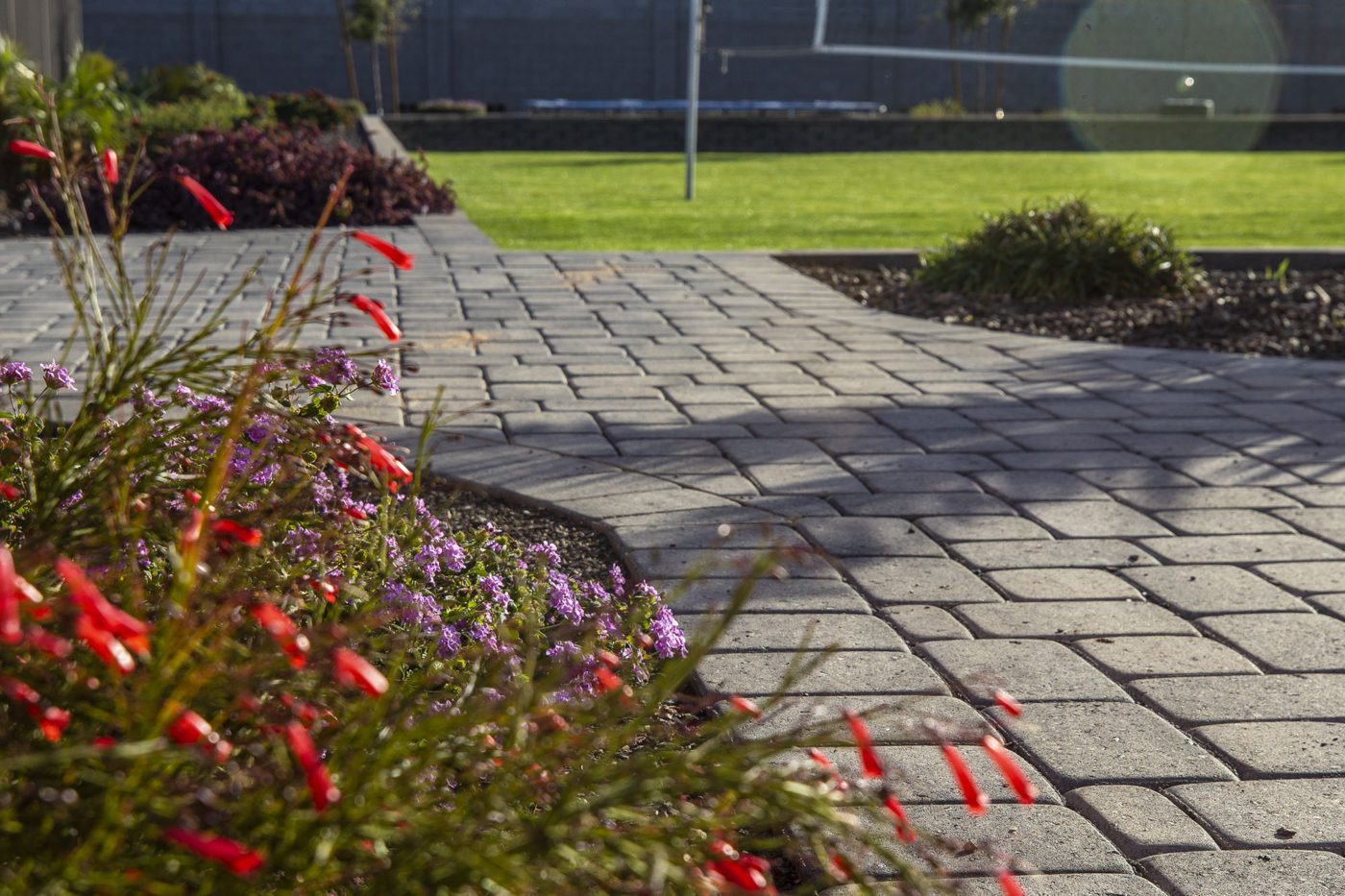
Permeable surfaces that allow water to infiltrate naturally
These features not only help reduce erosion, but also give trees and plants access to moisture that might otherwise be lost.
Upgrade to Irrigation
One of the biggest opportunities for water conservation lies in irrigation.
Traditional spray and sprinkler systems often lose water through evaporation, overspray, and runoff. Drip irrigation, on the other hand, delivers water directly to the root zone, where plants need it most.
Modern irrigation systems become even more efficient when paired with smart technology, like:
Weather-based controllers that automatically adjust watering schedules based on rainfall, temperature, and seasonal conditions
Soil moisture sensors that prevent unnecessary watering by measuring when the ground actually needs additional moisture
Not only do these upgrades reduce water use, they also prevent overwatering and give homeowners a convenient, “set-it-and-forget-it” watering solution.
Group Plants by Their Water Needs
One of the smartest landscape design principles is hydrozoning—grouping plants with similar water requirements together. After all, not every plant requires the same amount of irrigation.
For example:
Drought-tolerant shrubs and native plants can share one irrigation zone.
Moderate-water ornamentals can occupy another.
Higher-water plants, if included at all, can be concentrated in smaller, easier-to-manage areas.
This approach allows each section of the landscape to receive only the water it truly needs, avoiding waste and simplifying irrigation management.
Choose Native Plants to Conserve Water
One of the most effective ways to reduce water use is by selecting plants that naturally thrive in your local climate.
Native and climate-adapted plants often require significantly less supplemental irrigation once established because they’re already suited to local conditions. They’re also typically more resilient during periods of drought and temperature extremes.
That doesn’t mean your landscape has to consist entirely of native plants. Many non-native species perform beautifully in dry climates as long, as they’re chosen thoughtfully and matched to the right growing conditions.
The goal isn’t to eliminate variety. It’s to choose plants that can flourish without constant or excessive watering.
Use Mulch to Lock In Moisture
Mulch—a layer of material applied to the soil’s surface—is one of the simplest and most cost-effective tools for conserving water.
A layer of mulch helps:
Reduce evaporation
Keep soil temperatures more consistent
Suppress weeds (which compete for moisture)
Improve soil quality over time (with organic mulches)
The material you use for mulch can be organic (bark, wood chips, compost, grass clippings) or inorganic (gravel, rock, landscape fabric, rubber). Whatever you choose, using a layer of mulch to cover exposed soil helps every irrigation cycle go a little further.
Reduce High-Water Areas
A large expanse of traditional grass is often the thirstiest part of a landscape. Reducing your yard size by replacing portions of grass with planting beds, patios, gravel, or drought-tolerant groundcovers can significantly reduce water consumption. (Plus, they add visual interest!)
Many homeowners find they rarely use every square foot of grass they maintain. When they think about how they actually use their outdoor space, they often find they can shrink their lawn area without sacrificing functionality.
The result is a landscape that’s easier to maintain and more efficient year-round.
Small Changes Add Up
Significant water conservation doesn’t have to happen all at once. Even small improvements can make a noticeable difference over time.
Installing a rain barrel, adding mulch, adjusting irrigation schedules, or replacing one section of turf are all meaningful steps toward a more efficient, sustainable landscape. There’s no need to wait until you can overhaul your yard. Just take a look around and evaluate a small change you could make right away.
Designing for the Future
Landscaping in an arid climate requires a different way of thinking. The most successful landscapes don’t fight the environment; they work with it—capturing rain when it comes, using water wisely, and choosing plants and materials that thrive naturally.
The result is a yard that’s both beautiful and resilient. With these water-wise techniques, homeowners can create landscapes that stand the test of time while making the most of one of Earth’s most valuable resources.