When homeowners think about increasing their property value, they tend to focus on indoor improvements: kitchen renovations, bathroom upgrades, new flooring, and so on. These are all worthwhile investments…but what about outside the house?
Your landscape is one of the first things potential buyers notice, and it can have a significant impact on how your home is perceived. A well-designed yard can not only improve curb appeal, but also create additional living space, making a property substantially more attractive to buyers.
Of course, not all landscaping improvements offer the same return on investment (ROI). So which landscape design upgrades are truly worth it when it comes to increasing your home’s resale value?
If you’re looking to get the most return out of your landscaping investment, here are some of the best places to start.
1. Curb Appeal
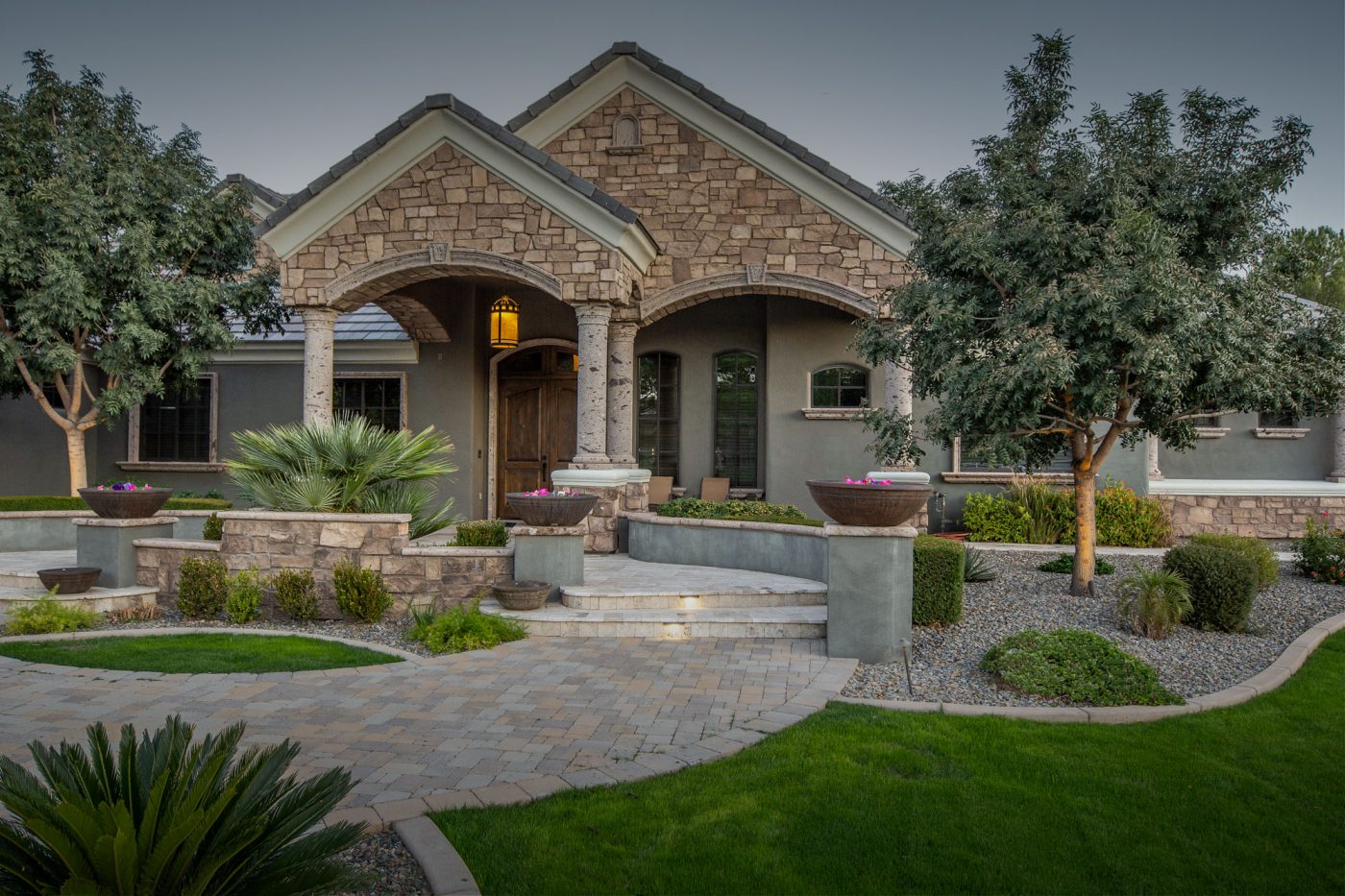
First impressions do matter, especially when it comes to real estate. A home with an attractive, well-maintained front yard immediately feels more welcoming, well kept, and appealing.
Even better, improving curb appeal doesn’t necessarily require a complete landscape overhaul. Even relatively simple changes can make a noticeable difference. Consider:
- Adding fresh mulch or decorative rock
- Replacing overgrown shrubs
- Planting colorful flowers
- Updating the landscaping around your front entry
- Adding clean, defined borders around planting beds
- Adding walkways to help give your yard a more polished appearance
The goal is to create a landscape that complements your home’s architecture and looks intentional, attractive, and well-maintained.
2. Trees
Trees are one of the most valuable long-term investments you can make when it comes to your landscape. Not only are they beautiful, but they’re also functional—adding shade, privacy, and character to a property. Plus, in hot climates like Phoenix, strategically placed shade trees can also help reduce heat around the home and make outdoor spaces more comfortable.
Choosing the right trees is important. Look for species that are well-suited to your climate, available space, and maintenance preferences. Planting a tree that will eventually become too large for its location, or one that requires excessive watering, can create more problems than benefits.
If possible, add mature trees to your landscape to get immediate benefits. If that isn’t an option, even newly planted trees are still worth it. Thoughtful planting today can contribute to a more attractive and valuable property in the future.
3. Outdoor Living Spaces
Today’s homeowners see their yards as extensions of their indoor living spaces. A well-designed patio, outdoor dining area, or comfortable gathering space can make a home feel larger and more versatile.
Outdoor living improvements can range from relatively affordable additions, like a paver patio or built-in seating, to more elaborate features such as outdoor kitchens, built-in fireplaces, and covered entertainment areas.
When considering these upgrades, think about how potential buyers are likely to use the space, and design with flexibility in mind. A functional patio that could be used for dining or relaxing may have broader appeal than a highly customized outdoor feature.
It’s also important to consider your climate. In the Southwest, shade structures, ceiling fans, and other cooling features can make outdoor living areas much more usable throughout the year, making them ideal upgrades.
4. Low-Maintenance, Water-Efficient Landscaping
A beautiful landscape can be a major selling point, but one that requires excessive maintenance may be less appealing to potential buyers.
Many homeowners appreciate landscaping that looks great without demanding hours of work every weekend. And in areas where water conservation is a priority, this becomes even more important.
Drought-tolerant plants, efficient irrigation systems, decorative rock, and appropriately sized lawn areas can all help reduce maintenance and water consumption.
That doesn’t mean you have to eliminate greenery. The key is finding a balance between beauty, functionality, and practicality. A thoughtful combination of native or climate-adapted plants, shade trees, and ground covers can create a lush, inviting landscape while keeping ongoing maintenance manageable.
5. Landscape Lighting
Landscape lighting is an improvement that can offer a big visual impact without requiring a massive investment.
Strategically placed lighting can highlight architectural features, illuminate trees, define walkways, and make outdoor gathering spaces more inviting after dark.
It can also improve safety by making steps, pathways, and entrances easier to navigate.
For the best results, focus on subtle, intentional lighting rather than illuminating every corner of your yard. A professionally designed lighting system can create a warm, welcoming atmosphere while emphasizing your property’s best features.
When possible, use energy-efficient LED fixtures to help keep operating costs low.
6. Walkways and Hardscaping
Hardscaping can improve both the appearance and functionality of your landscape.
Paver walkways, natural stone paths, decorative retaining walls, and defined garden borders can help create a cohesive design while making the yard easier to navigate.
When choosing materials, consider the style of your home and the surrounding landscape. Timeless, durable materials generally have broader appeal than highly unusual or trendy designs. A professional, local landscape designer can help you choose materials that fit both the look and function of your property.
Quality installation is also important. Properly installed hardscaping can provide years of use, while poorly executed projects may eventually become expensive repairs.
You should also pay attention to the condition of any existing hardscape. Cracked concrete, uneven pathways, and deteriorating retaining walls can make an otherwise attractive property feel neglected. Upgrading or repairing these features will instantly make your yard look and feel more appealing.
7. Regular Landscape Maintenance
Don’t overlook regular maintenance on your yard. Sometimes, the best return on investment comes from taking care of what you already have.
Overgrown trees, dead plants, patchy lawns, broken irrigation systems, and neglected planting beds can all detract from a property’s appearance.
Regular pruning, irrigation maintenance, weed control, and seasonal planting can help protect your landscaping investment and keep your property looking its best.
Before investing in expensive new features, make sure your existing landscape is healthy, functional, and well-maintained. You may be surprised by how much difference a little attention can make.
Making Smart Landscaping Investments
When it comes to landscape design ROI, there’s no single improvement that guarantees the highest return. The value of a landscaping project ultimately depends on your location, the condition of your property, neighborhood expectations, and the preferences of potential buyers.
More often than not, the smartest approach is to prioritize improvements that offer a combination of visual appeal, everyday functionality, durability, and manageable maintenance. When you strike the right balance of these elements, you’ll end up with a yard that not only improves your quality of life now, but adds lasting value to your property.