
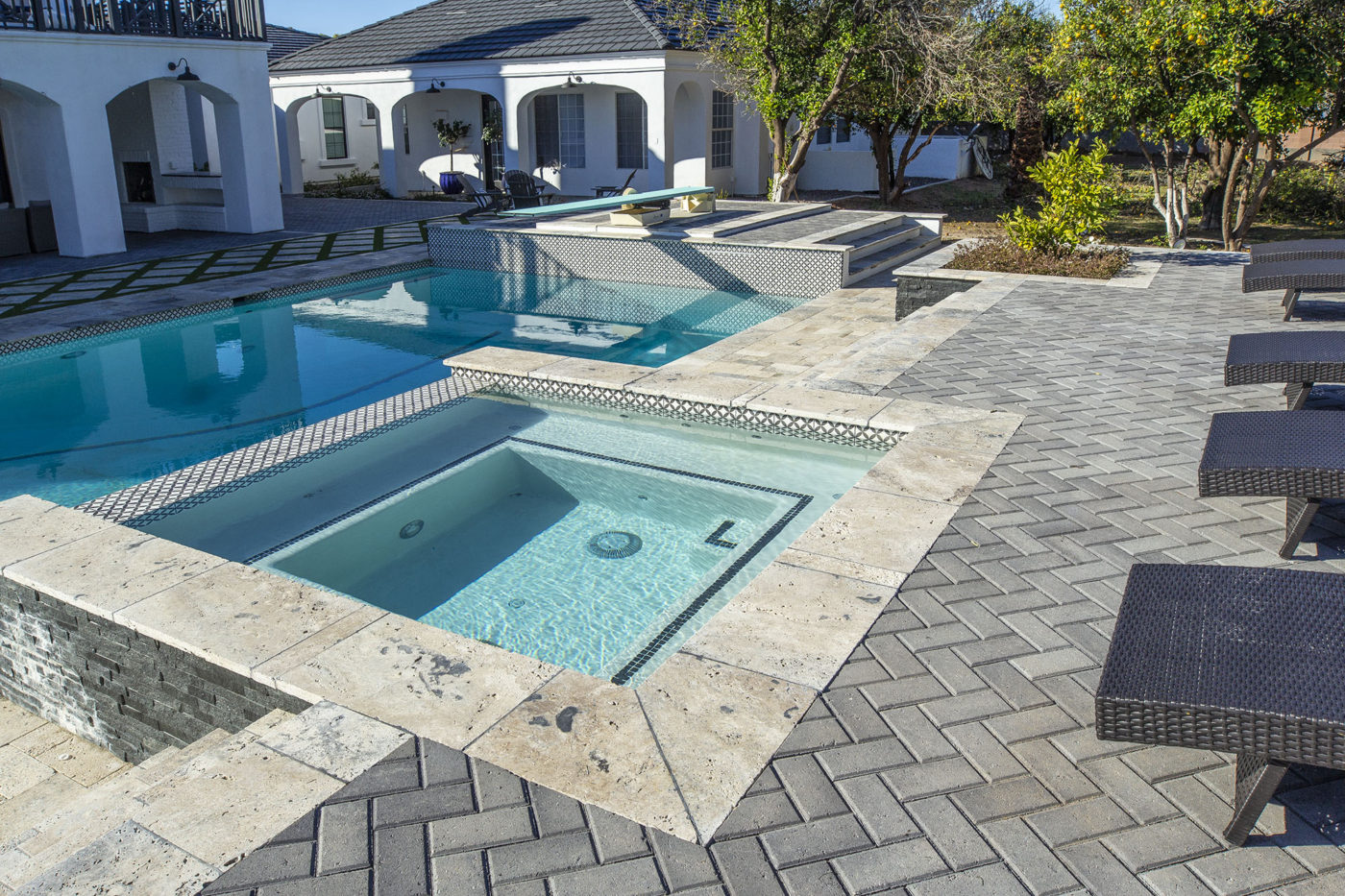
A hot tub can turn a backyard into your own personal retreat. Whether you want a quiet place to unwind at the end of the day, a cozy gathering spot for friends, or a spa-like addition to a larger pool area, there are plenty of ways to incorporate a hot tub into your landscape.
If you’re considering adding a hot tub to your outdoor space, one of the first decisions you will need to make is whether to choose an above-ground hot tub or build an in-ground spa.
Both options have their advantages. Ultimately, the right choice depends on your budget, available space, and design and usage goals. Here is a closer look at the differences between above-ground and in-ground hot tubs and what to consider before choosing one for your yard.
Above-Ground Hot Tubs
Above-ground hot tubs are probably what most people picture when they hear the words “hot tub.” These are freestanding, self-contained units that include the shell, pumps, filtration system, heater, and controls in one package.
They can be installed on any properly prepared surface, including a patio, concrete pad, or reinforced deck.
One of the biggest advantages of an above-ground hot tub is the simplicity and speed of installation. Because the major components are integrated into the unit, installation is almost certainly faster than building an in-ground spa. Once the site is prepared and the necessary electrical connections are in place, the hot tub can be installed right away, without significantly disturbing the rest of the yard or landscaping.
Another nice thing about above-ground models is that they are available in a wide range of sizes and styles—from smaller tubs that accommodate two or three people to larger models that can comfortably seat a family or group of friends. Plus, they often include built-in features such as adjustable jets, lounge seats, lighting, waterfalls, speakers, or even specialized massage settings.
Cost is another major advantage. Although premium above-ground hot tubs can still be a substantial investment, they are usually less expensive than a custom in-ground spa.
For most homeowners, the biggest drawback to an above-ground hot tub is appearance. Even the more attractive models can feel somewhat separate from the surrounding landscape if they are simply placed in the middle of a space.
That said, good landscape design makes a major difference. By intentional designing around an above-ground hot tub—with decking, decorative screens, planters, masonry walls, or built-in seating, for example—you can make it feel more like a natural part of the outdoor living space.
In-Ground Hot Tubs
An in-ground hot tub, sometimes called a built-in spa, is a different thing altogether. The major difference is that an in-ground hot tub becomes a permanent part of the landscape.
These spas are often constructed using concrete, gunite, tile, or other pool-building materials. They can be designed almost entirely from scratch and can either stand alone or be incorporated into a swimming pool.
The greatest advantage of an in-ground spa is design flexibility.
Because the spa is built specifically for the space, homeowners can customize the shape, size, materials, elevation, steps, seating, and surrounding hardscape. Rather than relying on mass-produced options, an in-ground spa can be tailored to match a pool, patio, outdoor kitchen, fire feature, or other elements already planned for the yard. This leads to a more cohesive, high-end appearance.
An in-ground spa can also be positioned in ways that make it feel naturally integrated into the landscape. For example, it might be tucked into the corner of a courtyard, elevated slightly above a pool, surrounded by stone, or positioned near an outdoor fireplace. You can make it the focal point of your yard, or you can create a private oasis—whichever you prefer.
The downside is that this level of customization comes with additional cost and complexity.
Building an in-ground hot tub requires excavation, plumbing, electrical work, construction, finishing materials, and landscape restoration. The project typically takes longer and requires more planning than installing a prefabricated spa.
Repairs and maintenance may also be more involved because some of the plumbing and mechanical systems are built into or around the structure.
Which Hot Tub Option Is Right for You?
Now that we’ve explored the major pros and cons of each option, how do you determine which hot tub is right for your yard? Here’s what to keep in mind when making your decision.
Think About Comfort and Features
Design is important, but so is the actual experience of using the hot tub.
Above-ground spas often have an advantage when it comes to ergonomics and overall comfort. Because they are manufactured specifically as hot tubs, many models include carefully positioned jets, molded seating, neck supports, lounge seats, and different massage zones.
In-ground spas can certainly include jets and comfortable seating, but those features generally need to be designed into the project, which can add to the cost and complexity.
So, if therapeutic massage (or some other specific feature) is one of your main reasons for buying a hot tub, it may be worth exploring the features of some above-ground options.
Consider Energy Efficiency
Heating and maintaining hot water requires energy, so insulation matters.
Many modern above-ground hot tubs are heavily insulated and come with fitted covers designed to reduce heat loss. Because the equipment and shell are engineered as a complete system, they can be relatively efficient to operate.
In-ground spas can also be designed for efficiency, but performance depends heavily on the construction, insulation, equipment, plumbing layout, and cover.
In warmer climates, outdoor temperatures may reduce some heating demands during much of the year, but a well-designed system can still make a noticeable difference in operating costs.
How Will the Hot Tub Fit Into Your Yard?
Sometimes the choice comes down to the overall landscape plan.
If you already have an established yard and simply want to add a hot tub, an above-ground model may be the easiest option. Strategic decking, planting, lighting, or privacy screening can help integrate it into the space without requiring a major renovation.
If you are designing a whole new backyard or undertaking a large landscape remodel, an in-ground spa may be worth considering. Building it at the same time as patios, retaining walls, pools, or other major landscape features gives you much more flexibility to create a unified design.
Either way, placement matters. Ask yourself questions like:
- How far will the hot tub be from the house?
- Is there a safe, comfortable walking surface leading to the hot tub?
- What will the view look like from inside the spa?
- Will neighboring homes have a direct view into the area from their backyards?
Shade, privacy, lighting, and nearby seating can all make a hot tub more enjoyable to use. Keep the entire landscape design in mind when choosing the right hot tub for your space.
Choosing the Right Hot Tub for Your Landscape
There is no universally right answer when choosing between an above-ground and in-ground hot tub. There are trade-offs for each:
- Above-ground spas typically offer quicker installation, lower upfront costs, excellent built-in features, and more flexibility.
- In-ground spas offer greater customization, seamless integration with the surrounding landscape, and a high-end look..
The good news is that no matter which direction you choose, you’ll almost certainly be able to find a hot tub that works for your yard and your lifestyle. Be thoughtful, be intentional, and you’re sure to have your own backyard retreat in no time.