An outdoor walkway does more than just connect one part of your yard to another. Walkways are actually very powerful design elements for an outdoor space. They help define the layout of a landscape and create a natural sense of flow in the yard. Plus, they give you an opportunity to bring texture, color, and personality into your outdoor aesthetic.
The right walkway can make a front entry feel more welcoming, connect a patio to a garden or pool, or turn an otherwise overlooked side yard into an intentional part of the landscape. And with so many materials available—from traditional pavers to loose gravel—there is a design option for nearly every style and budget.
Here are some of the most popular walkway materials and how to know which one is right for your yard.
Pavers
Pavers are one of the most versatile choices for landscape walkways. They come in a wide range of shapes, sizes, colors, and finishes, so they’re easy to adapt to any style. They fit in almost everywhere, from a traditional cottage garden to a sleek, contemporary yard.
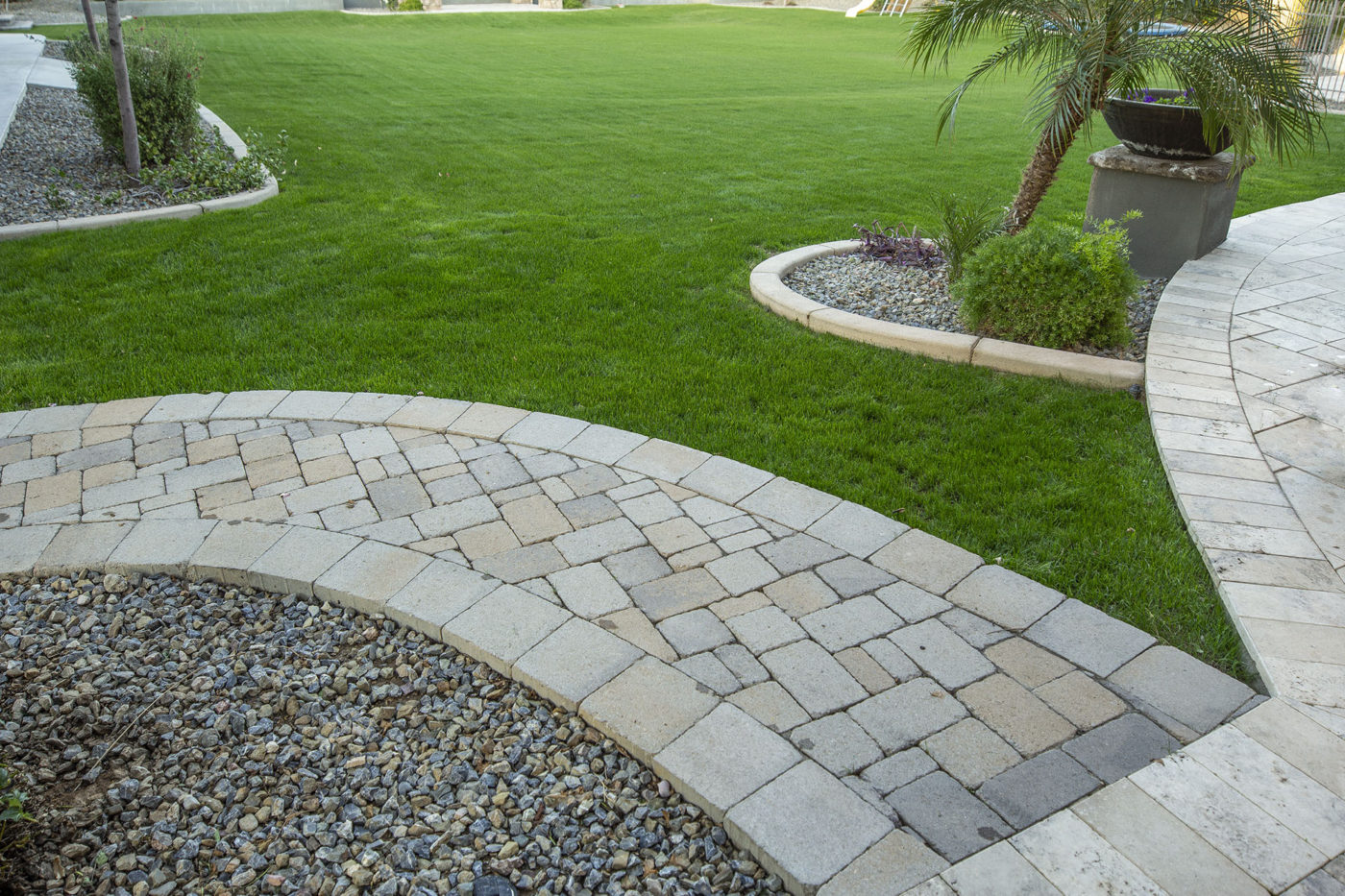
Concrete pavers are especially popular because they mimic the appearance of natural stone while offering greater consistency in size and installation. They can be laid in simple running patterns, geometric grids, herringbone designs, or more organic arrangements.
If you already have a patio, driveway, or pool deck, pavers can also help coordinate your walkway with those existing hardscape materials.
One final advantage of individual pavers is that damaged pieces can usually be replaced without redoing the entire walkway—as long as everything was installed properly in the first place. A well-prepared base helps prevent shifting and settling over time.
Natural Stone
Natural stone gives a walkway a timeless, high-end appearance, offering natural variations in color and texture that make each installation unique.
To create these walkways, large pieces of flagstone, slate, limestone, or other natural materials are arranged according to your design. They can be fitted closely together for a more formal pathway, or spaced farther apart for a relaxed garden feel. Gaps between the stones can be filled with gravel, groundcover, or another complementary material.
Natural stone works especially well in landscapes where you want the walkway to feel integrated with the surrounding environment rather than highly structured.
When choosing a stone, one thing to keep in mind is the climate. In hot regions such as the Southwest, direct sunlight can cause some dark materials to become extremely warm. You should also consider surface texture, since very smooth stone may become slippery when wet.
Gravel
Gravel is a practical, affordable option that is excellent for creating informal pathways, particularly through gardens, side yards, or less heavily traveled areas. It also allows water to drain through the surface, which can be useful in areas where runoff is a concern.
It comes in many colors and sizes, so it can complement a wide variety of landscape styles. Warm-toned gravel blends naturally into a desert landscape, while gray or charcoal gravel lends itself to a more contemporary look.
The biggest drawback is that gravel moves almost too easily. Gravel pieces often migrate beyond the walkway, especially in high-traffic areas. Installing edging helps keep the path defined.
Stepping Stones
Sometimes a walkway does not need to be completely paved. Large stepping stones can create a functional, whimsical route through a lawn, gravel area, garden bed, or groundcover. This approach works particularly well for secondary paths where traffic is relatively light, or for homeowners who want their outdoor design to feel open and natural.
You can also combine stepping stones with other walkway materials. Concrete stepping stones set into gravel, for example, are frequently used in modern landscape designs; they provide the stability of a solid walking surface while maintaining a clean, minimalist appearance.
When designing a stepping stone pathway, make sure the stones are placed to fit a comfortable walking stride in order to make sure the walkway is usable as well as beautiful.
Brick
Brick walkways bring warmth and character to a landscape. They are especially well suited to traditional, cottage-inspired, historic, or Mediterranean-style homes.
The magic of brick is in how it is laid. Different laying patterns can dramatically change the final appearance. A straightforward running bond feels simple and classic, while herringbone or basket-weave patterns create more visual interest.
Brick can develop natural variation over time. Many homeowners consider this part of its charm. However, make sure brick will stand up to your climate and intended level of use.
Poured Concrete
A poured concrete walkway may sound boring, but concrete doesn’t have to look basic.
Modern concrete walkways can incorporate scoring, curves, exposed aggregate, textured finishes, or large geometric sections separated by gravel or planting areas. Concrete can also be colored or finished to coordinate with other hardscape materials.
Because it creates a continuous surface, concrete is particularly useful when accessibility, wheelchairs, strollers, or easy everyday walking are a priority.
Mixing Materials
Some of the most interesting walkways use more than one material.
You might combine large stone pavers with decorative gravel, use natural stone borders around a concrete path, or transition from a formal paved entry to a looser stepping-stone path deeper in the yard.
Mixing materials like this can also help create visual hierarchy. A wider, more substantial walkway might signal the primary entrance, while narrower gravel or stepping-stone paths could guide people toward secondary destinations.
The key is cohesiveness. When designing your walkway, use materials and colors that already exist elsewhere in your landscape; this helps the walkway feel connected rather than random.
Consider How the Walkway Will Be Used
Appearance matters, but function should always guide design.
For example, a front walkway (something that will be used by you and your visitors every day) should provide a stable, obvious route to the door; however, a path to a garden bench can be narrower and more informal. Likewise, walkways near pools should prioritize slip resistance, while paths that will be used at night may benefit from integrated landscape lighting.
The width of your walkway also makes a significant difference. A generous walkway often feels more welcoming and comfortable than one that forces people to walk single file.
Make the Journey Part of the Landscape
Remember: The best walkway does not simply connect two points. It contributes to the experience of moving through the yard.
If you’re still having trouble choosing the right materials for your walkway, a professional landscape designer can help you balance appearance, durability, climate, and the way the space will actually be used.
Whether you choose classic pavers, natural stone, gravel, concrete, or a combination of materials, a thoughtfully designed walkway can make your entire landscape feel more polished, purposeful, and inviting.