Outdoor living spaces are an extension of the home—so why do so many people choose to rely on shades of beige, brown, and gray when designing their yard? A little color can go a long way toward making a patio, courtyard, pool area, or backyard feel more welcoming, polished, and personal.
And here’s the really good news: adding color does not have to mean making permanent or expensive changes. From outdoor furniture and rugs to accent tiles and flowering plants, there are plenty of ways to introduce color into your yard without going through a major renovation.
Here are some of our favorite ways to bring more color and personality into an outdoor living space.
Try Colorful Outdoor Furniture
Furniture is one of the easiest places to make a colorful statement. Instead of defaulting to neutral chairs and loungers, consider bringing in a rich blue, green, terracotta, yellow, or even earthy red.
Adirondack chairs, dining chairs, side tables, benches, and chaise lounges can all serve as colorful focal points. Even one colorful piece can make all the difference in making your outdoor setup more interesting and inviting.
If you’re not sure what colors to bring in, look to your surrounding landscape for inspiration. For homes in the Southwest, for example, colors inspired by the desert often work especially well. Think deep greens, warm clay tones, sunset oranges, turquoise blues, and dusty reds. These colors feel lively without looking out of place in the environment.
If brightly colored furniture feels like too much of a commitment, choose pieces with neutral frames and use colorful cushions instead.
Add an Outdoor Rug
An outdoor rug can completely change the feel of a patio or seating area. In addition to defining the space, it’s a simple way to introduce color, pattern, and texture, especially if your outdoor hardscape is relatively neutral. Your existing concrete, pavers, and stone can provide a versatile, neutral backdrop, while the rug brings in the personality.
The great thing about outdoor rugs is there are so many design options to choose from: geometric patterns, stripes, medallion designs, floral designs, and so on—all in every color of the rainbow.
No matter what design route you choose, be sure to look for outdoor-rated rugs only. These rugs are designed to withstand sunlight, moisture, and dirt, so they’ll hold up better over time.
Incorporate Colorful Pillows
Outdoor throw pillows may be the simplest way to experiment with color. They are relatively affordable, easy to swap out, and available in nearly every color and pattern imaginable. Because they’re so easy to replace, they’re also perfect for changing the look of your outdoor living space from season to season.
Here are some general design tips when choosing outdoor throw pillows:
- Mix patterns at different scales. Pair large, bold prints with smaller, subtle ones. This keeps things interesting without looking too busy.
- Add a few occasional solid-colored pillows. This gives the patterns room to breathe.
- Pull colors from the surrounding space. Use colors that already exist in your landscape to create a cohesive look.
- Vary the size and shape of your pillows. A combination of standard squares, larger pillows, lumbar pillows, or even circular pillows will help create a layered, comfortable look.
- Don’t overfill the furniture with pillows. Make sure there’s still room for people to sit; after all, that’s what the furniture is there for.
Make a Statement With Accent Tile
If you are ready for something more permanent, decorative tile adds incredible character to an outdoor space.
Colorful or patterned tile can be used on:
- Outdoor kitchen backsplashes
- Fireplace surrounds
- Stair risers
- Bar fronts
- Fountain walls
- Built-in benches
- Pool or spa details
Even a relatively small section of tile can become a major design feature. Just make sure any tile you choose is appropriate for outdoor use and your local climate.
Let Containers Bring the Color
Planters are another flexible way to introduce color. Instead of relying entirely on terracotta or neutral containers, mix in glazed ceramic pots in blues, greens, yellows, or other colors that complement your home.
Or, if you prefer neutral containers, let the plants provide the color instead. Flowering plants, colorful foliage, and ornamental grasses can create constantly changing color combinations throughout the year.
Use Flowers Strategically
You do not need an entire garden of flowers to make an impact.
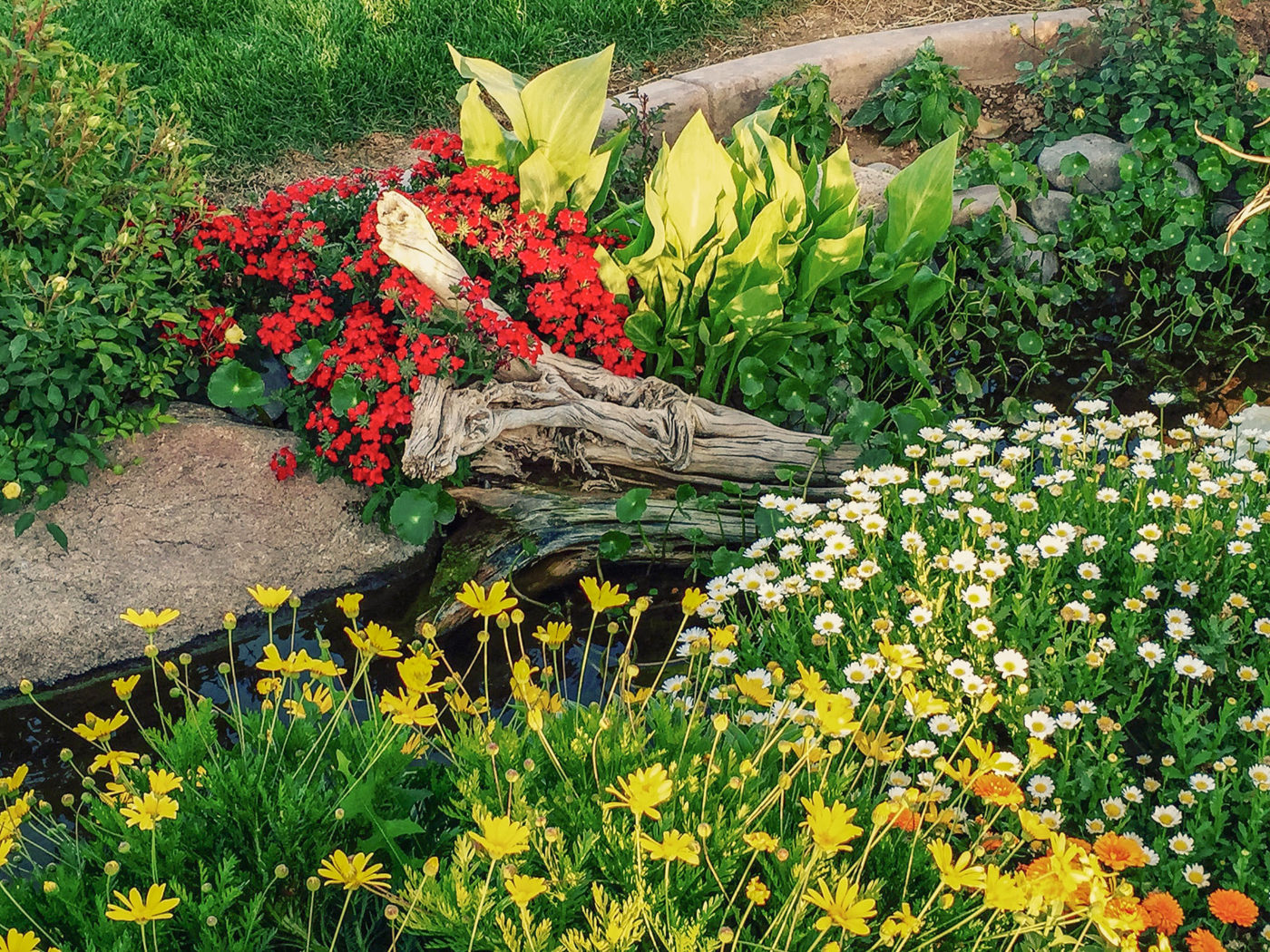
A few concentrated areas of blooms can create noticeable pops of color around patios, entryways, walkways, or seating spaces. Containers and raised beds are especially useful here, because they allow you to place color exactly where you want it.
If low maintenance is important, choose flower varieties that are native or climate-adapted. In hot climates such as Arizona, for example, choosing plants suited to intense sun and heat is key. Desert-adapted flowering plants can provide beautiful color while requiring less water and attention.
Add Color With Outdoor Accessories
Small decorative details can make a big difference. Little touches like lanterns, umbrellas, outdoor curtains, tableware, garden art, decorative pots, and even watering cans will contribute to a yard’s overall color palette.
Plus, these accessories can be functional. An outdoor umbrella creates a large visual impact while also providing valuable shade. A colorful ceramic garden stool can function as both a side table and a decorative accent.
To keep things from becoming too chaotic, use repeating colors throughout the yard. When you use the same color in multiple places, it will help the space feel intentional rather than random.
Consider How Color Works With Your Home
Before choosing your specific color palette, look at the colors already present in your house and landscape.
Exterior paint, roofing, stone, pavers, fencing, and existing plants all influence which colors will look most cohesive. A neutral home may give you plenty of freedom to experiment, but if your house already has strong architectural colors, a more restrained palette may work better.
Also, if your yard is very visible from inside your house, you can carry the color scheme from your interior decor out into your yard.
Remember: the trick isn’t necessarily to match existing elements, but to complement them.
Create an Outdoor Space That Feels Like You
Color is one of the easiest ways to bring personality to an outdoor living area. It can make a space feel energetic and playful, peaceful and inviting, or sophisticated and dramatic.
You do not have to transform everything at once. Start small—with a colorful chair, a patterned rug, or a few bright planters. Over time, you can layer in additional elements until the space feels complete.
Thoughtful design can turn your yard into a space that feels every bit as inviting as the inside of your home. Take some time to plan your color palette intentionally, or work with a professional landscape designer to bring the different elements together. With the right mix of color, texture, and personality, even a few small changes can have a major impact.