
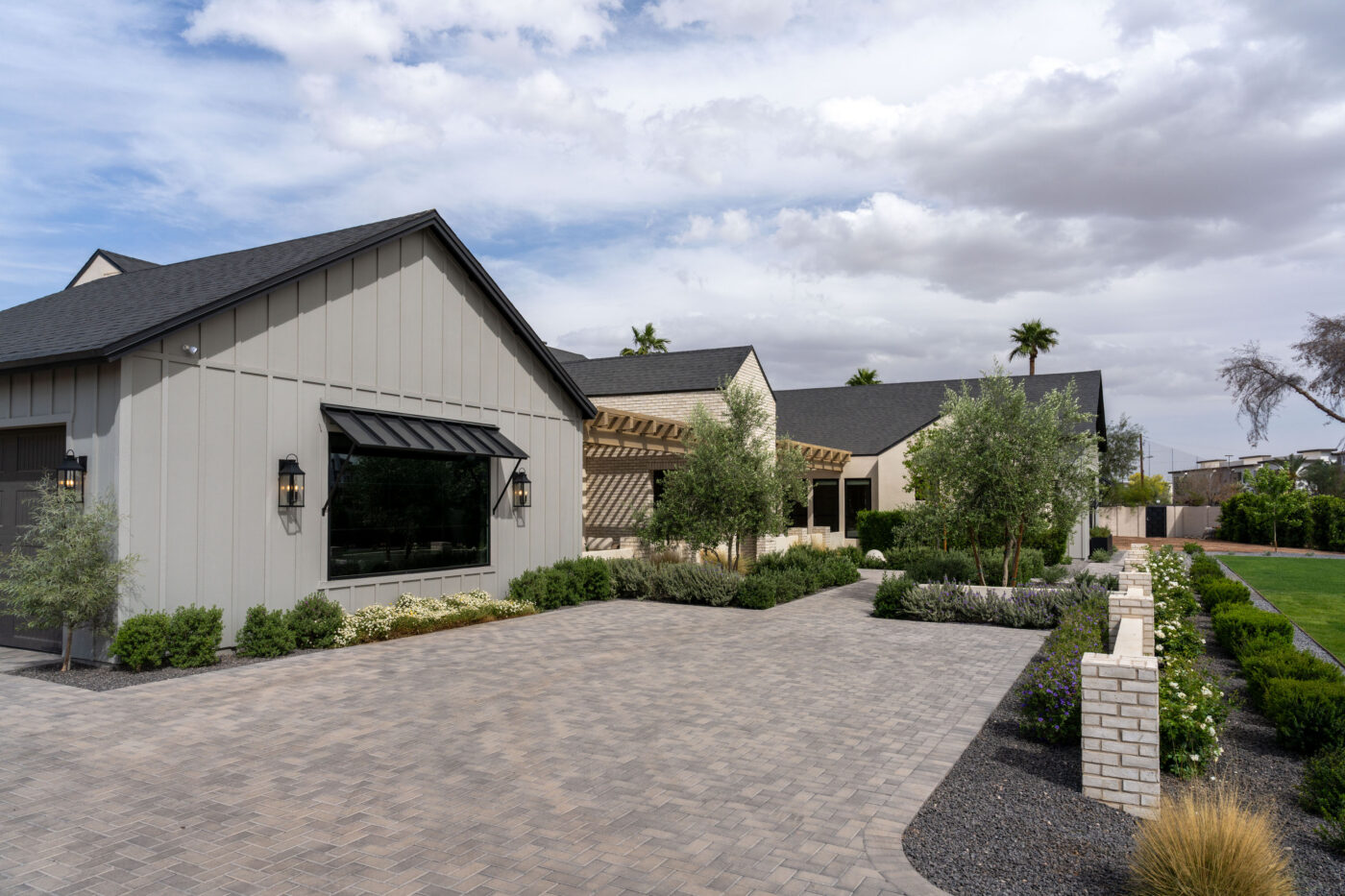
Southwest landscapes have a distinct, timeless appeal. They’re grounded in natural materials, warm tones, and a strong connection to the surrounding environment. And while plants play an important role in these landscape designs, it’s often the hardscape—gravel, stone, and structural elements—that defines the overall look and feel.
When done well, these materials work together to create a landscape that feels both effortless and intentional: low-maintenance, visually cohesive, and built to last. Whether you’re designing a full yard or refreshing a few key areas, incorporating gravel and stone is one of the most effective ways to bring Southwest style to your yard.
Start With a Natural Color Palette
The foundation of Southwest design is color. This design style is grounded in warm, earthy tones that reflect the desert landscape—sandy beiges, soft browns, muted reds, and dusty grays.
Gravel and stone are ideal for establishing this palette. Materials like decomposed granite, crushed stone, and river rock naturally blend with desert surroundings while providing a clean, finished look.
Choosing one or two complementary tones, and repeating them throughout the space, helps create a cohesive design. Remember: too many colors can make a landscape feel busy and chaotic, while a restrained palette feels calm and intentional.
Use Gravel as a Design Element, Not Just Filler
Gravel often gets treated as background material or an afterthought, but in Southwest landscapes, it should really play a starring role.
Instead of thinking of gravel as something to “cover dirt,” see it as a way to define spaces and guide movement. It can:
- Create pathways and walking zones
- Frame planting beds
- Separate outdoor “rooms”
- Highlight focal points like trees or sculptures
You can create clean edges with steel, stone, or concrete boulders to help keep gravel areas well-defined. The contrast between structured lines and loose material will only contribute to the Southwestern feel of your design.
Incorporate Natural Stone for Texture and Contrast
If you think of gravel as your base layer, then think of natural stone as the element that adds depth and character.
Boulders, flagstone, and stacked stone bring texture, variation, and a sense of permanence to your landscape. Even a few well-placed stones can dramatically change how a space feels.
Consider using stone to:
- Anchor planting areas with boulder groupings
- Create informal seating or retaining walls
- Build patios or stepping-stone pathways
- Add vertical interest with stacked stone features
The key here is to keep everything looking natural. Use groups of odd numbers of stones with varying sizes. Partially bury some of them so they feel like they belong in the landscape rather than being placed there after the fact. This natural vibe will add to the aesthetic of the yard.
Define Outdoor Spaces With Hardscape
Hardscape elements are one of the best ways to turn a yard into a collection of functional spaces.
Gravel patios, stone walkways, and paved seating areas can define how people move through and use the landscape. While these are popular elements in all types of landscape design, their use in Southwest design is often more relaxed and organic, rather than overly formal.
A simple gravel courtyard with a fire pit, for example, can become a central gathering space. A flagstone path can lead visitors through the yard, creating a sense of discovery. And a hardscaped patio creates a landing place for outdoor furniture or a container garden.
Balance Hardscape With Planting
One thing Southwest landscapes do well is strike the right balance between open space and planting. Gravel and stone create negative space, allowing individual plants to stand out.
Instead of dense planting beds, use fewer plants with more spacing. This highlights their shapes and creates a clean, uncluttered look. Architectural plants—like agave and cactus—pair especially well with gravel and stone, with bold forms that stand in contrast to the simplicity of the surrounding hardscape materials.
Design for Durability and Low Maintenance
One of the biggest advantages of using gravel and stone is how practical they are—especially if you actually live in the desert Southwest. Unlike grass or high-maintenance planting beds, these materials require minimal upkeep once installed.
They also:
- Reduce water usage
- Improve drainage
- Help control erosion
- Withstand heat and sun exposure
More often than not, homeowners that use gravel and stone in their landscape don’t have to worry about anything other than occasional raking, weed control, and topping off materials as needed. Overall, maintenance is significantly lower than with traditional landscapes.
Style That Lasts
Southwest design is rooted in simplicity, durability, and a deep connection to natural materials. When you use gravel, stone, and other hardscape elements thoughtfully, you create a landscape that feels grounded, intentional, and enduring—with quietly beautiful materials that age over time.
It’s a style that doesn’t rely on constant change or seasonal color to make an impact. Instead, it draws strength from its texture and form, balancing structure and openness to create a refined yet relaxed landscape that will look just as good years from now as it does today.