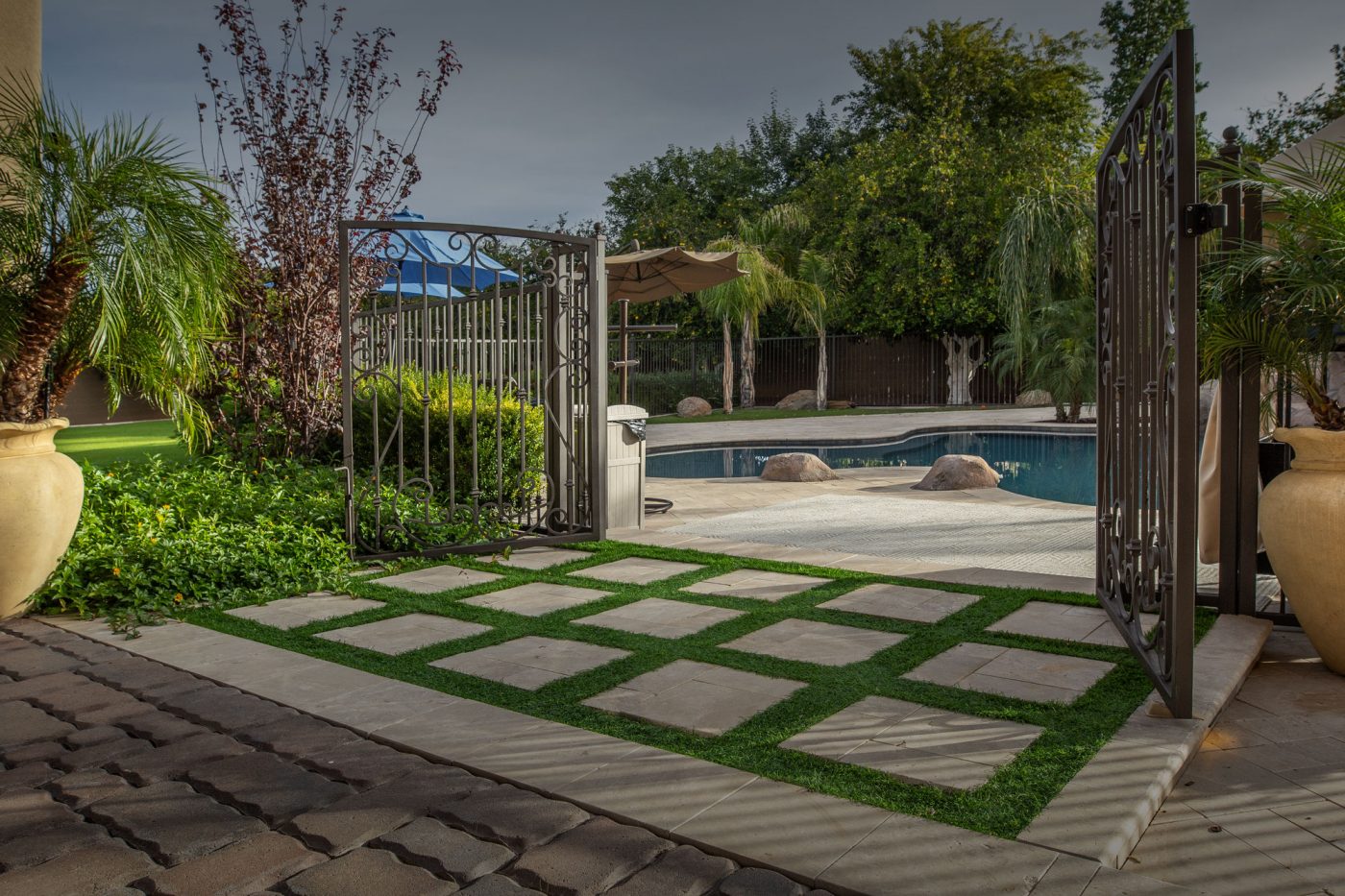
Travertine pavers have been a long-time favorite choice for patios, pool decks, walkways, and outdoor living areas—and for good reason. With their soft, natural tones and timeless texture, they bring understated elegance to almost any landscape style, from modern to Mediterranean to rustic.
But like any material, travertine comes with pros and cons. Understanding both can help you decide whether or not this popular material is the right fit for your outdoor space.
What is travertine?
Travertine is a type of natural limestone formed by mineral deposits from springs (often hot springs). Over time, it develops a distinctive, porous texture and layered appearance that gives it character and visual depth. It’s prized for both beauty and performance.
Travertine is cut into pavers, tiles, or slabs for use in outdoor applications. Because it’s a natural stone, every piece of travertine is unique. Color variations, subtle veining, and surface texture all add to its charm and appeal.
The Pros of Travertine Pavers
Travertine pavers have many positive attributes, including:
- They’re naturally cool underfoot. Travertine stays cooler than many other paving materials. Even in full sun, it tends to absorb less heat than concrete, bricks, or porcelain. This makes it a popular choice for places where people might walk barefoot, such as pool decks or patios.
- They have a timeless, high-end look. Travertine has a classic, elegant appearance that doesn’t go out of style. It has warm neutral tones (think: ivory, beige, walnut, silver, and gold) that blend beautifully with a wide range of architectural and landscape styles. Whether your home is modern, traditional, or somewhere in between, travertine will probably feel like a natural fit.
- They’re durable. When properly installed and maintained, travertine can last for decades. It’s strong enough to handle foot traffic, outdoor furniture, and even light vehicle use (in some applications). It won’t crack like poured concrete does, and since individual pavers can be replaced if needed, repairs are often easy.
- They are slip resistant. Travertine has a natural texture that provides excellent traction when honed or tumbled. This makes it a safer option around pools or in areas that get wet.
- They add real value. Travertine is a premium natural stone. As such, it often increases the perceived value of a property. Many homeowners see it as an upgrade that makes outdoor spaces feel more refined and thoughtfully designed.
The Cons of Travertine Pavers
Even with all those benefits, travertine pavers do come with some downsides too, including:
- They are more expensive upfront. Travertine typically costs more than alternatives like concrete pavers, poured concrete, or basic stone. While prices can vary based on grade and origin, it is almost always considered a mid-to-high-end material, and has the price tag to match. If you’re working with a large area, that extra cost can add up quickly.
- They require sealing. Because travertine is porous, it needs to be sealed to protect it from stains and moisture absorption. Without proper sealing, spills, sitting leaves, and even rainwater can darken or discolor the stone. Sealing will also help prevent algae or mildew growth in damper climates.
Most applications need to be resealed every one to three years, depending on climate and use. - They can be sensitive to chemicals. Like other forms of limestone, travertine is sensitive to acidic substances, like pool chemicals, vinegar, or citrus. These products or other harsh cleaners can etch or damage the travertine surface if they aren’t removed quickly. Travertine should only be cleaned with stone-safe products. While that’s not difficult, per se, it is something to factor in when considering long-term ownership.
- Their “natural” appearance isn’t universally appealing. Many people love the organic look of travertine, and its imperfections make it beautiful. Still, with its color variation and small holes/pits, no two pavers will ever look exactly the same. This may not appeal to someone who prefers a uniform, more modern look in their hardscaping.
Where does travertine work best?
Travertine shines in outdoor living spaces where comfort, beauty, and longevity matter most. With its cool feel, aesthetic appeal, low-slip texture, and ability to age gracefully, it can perform well in just about any region or climate when it’s properly installed.
Travertine works beautifully for:
- Pool decks
- Outdoor kitchens
- Walkways
- Courtyards
- Seating areas
- Firepit/fireplace areas
- Water features
Is travertine right for you?
If you’re looking for a natural, elegant material that feels great underfoot and elevates the look of your outdoor space, travertine is hard to beat. It offers a balance of beauty, durability, and comfort that few materials can match. If it fits your budget and you can keep up with the maintenance, then the pros of travertine likely outweigh the cons. Still, do your research, explore your options, and decide for yourself whether or not travertine is an investment that would pay off in your yard.
Ready to transform your yard with travertine pavers? Contact Rustic Creek Landscaping today to discuss your vision with one of our landscape design experts.