When temperatures inevitably climb in the Arizona desert, outdoor spaces go from inviting to unbearable. In hot climates, shade isn’t just a luxury—it’s essential for using and enjoying your landscape throughout the year.
That’s where thoughtful shade design comes in. Just as you would design hardscaping and plant placement, you can design in a way that creates beautiful, functional shady spaces. With the right combination of structures, plants, and other materials, you can transform even sun-drenched yards into more comfortable retreats.
Whether you’re designing a new outdoor living area or improving an existing space, strategic shade solutions can make all the difference in how your landscape feels and functions. Here are some of our best tips for creating cooler retreats for Arizona backyards.
1. Understand how the sun moves through your space.
Before adding shade elements at random, it’s important to observe how sunlight moves across your yard throughout the day.
Identifying the “hot spots” in your yard will help you prioritize shade placement so you can add shade elements that have the most impact. For example, a spot in your yard that only gets morning sun (which is typically softer and more pleasant) may not need a dedicated shade solution; but a spot that is exposed to harsh afternoon sun needs more attention.
Start by looking at the most used spaces in your yard, and the spaces you really want to protect. For many homeowners, that includes patios, outdoor kitchens, play areas, entryways/pathways, and pool decks. Which spaces get the most sun, and at what times? What areas are unusable because of their sun exposure? Shading these areas improves comfort, safety, and usability.
When you design with the sun in mind, you make the most of your investment.
2. Install pergolas or covered structures if possible.
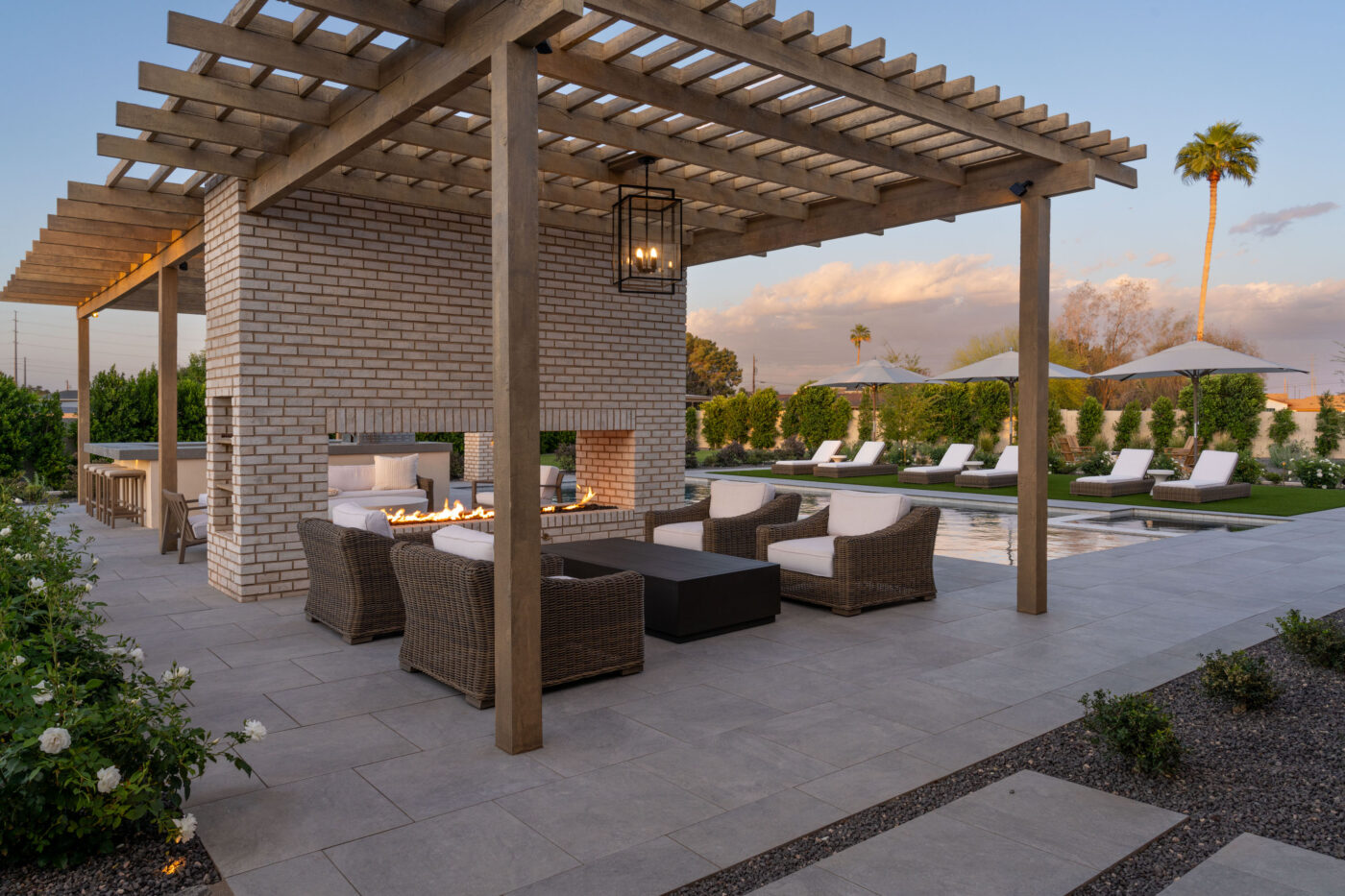
Permanent overhead structures—like pergolas, ramadas, and covered patios—are the most effective and reliable ways to create shade outdoors. These areas offer consistent protection and also create defined spaces that feel like outdoor “rooms” and add to your home’s living space. Plus, they help protect outdoor furniture and finishes from sun damage and fading, reducing maintenance over time.
Modern pergolas often feature adjustable slats or retractable canopies that allow homeowners to control sunlight exposure throughout the day. Wood, steel, and aluminum designs can all be customized to match your home’s architectural style. Add integrated lighting to extend usability into the evening, or install ceiling fans or misting systems to maximize heat relief.
3. Try shade sails for more flexible coverage.
With their clean lines and versatile styling options, shade sails have grown in popularity in recent years. These are tensioned fabric panels that can be installed at varying heights and angles to block UV exposure exactly where and when you need it. They also create dynamic visual interest as striking focal points.
Shade sails are particularly useful in areas where building a permanent structure isn’t practical (think: playgrounds or pool decks), or for homeowners who are designing on a budget. Choose light-colored fabrics to reflect heat while maintaining a bright, open feel.
The other benefit to sails is flexibility. They are easily repositioned, which means that even if you make changes in your yard, you can still use your sail to create shade in a new spot.
4. Don’t underestimate the power of a shady tree.
Natural shade is one of the most sustainable and visually appealing shade solutions available. Well-placed trees not only block sunlight; they also help cool surrounding air. This means that they can significantly reduce surface temperatures on patios, lawns, and walkways, both instantly and over time.
The specific type of shade tree you select is important. Consider canopy size, growth rate, and maintenance needs before planting. Trees that offer filtered light often create the most comfortable environment, allowing brightness without harsh exposure.
You also need to think about where to plant your shade tree. Planting on the west or southwest side of outdoor living areas will block strong afternoon sun and can dramatically improve comfort later in the day.
The biggest downside to a shade tree is that it requires patience while it grows and matures. But once it’s established a shade tree creates long-term value that no manufactured structure can fully replicate.
5. Consider the entire space—not just what’s overhead.
Shade design includes many factors—not just what you install overhead.
Ground surfaces play a major role in how hot an outdoor space feels. Materials that absorb and radiate heat (like dark concrete or asphalt) can counteract the cooling effects of overhead shade. To reduce heat retention and improve walkability, choose lighter-toned pavers, natural stone, or textured finishes. You can also add outdoor rugs or deck tiles to soften surfaces, define spaces, and enhance comfort.
Additionally, water features, planted borders, and boulder groupings also contribute to cooling (and to the sensory appeal of your entire yard).
6. Create a layered landscape.
The most successful landscapes combine multiple shade solutions to create depth, variety, and a welcoming aesthetic. Instead of one large shaded zone, the landscape becomes a series of comfortable retreats connected by pathways and plantings.
For example, a pergola-covered patio might transition into a tree-shaded seating nook, followed by a sail-covered play area. Layering shade in this way allows different parts of the yard to remain usable at various times of day.
You can also create these “layers” with features like outdoor curtains, climbing vines, and tall planters. These add vertical shade and privacy, making spaces feel more intimate and protected, while also creating different types of shaded spaces.
7. Don’t forget cooling and ventilation.
The ultimate goal isn’t just to “have shade.” It’s to create a comfortable, cool retreat in your backyard. To do that, you have to consider more than simply blocking the sun. You have to think about how to create an environment people actually want to spend time in—something that draws them outdoors on blazing hot days or warm summer nights.
Ceiling fans, misting systems and well-placed lighting help you do just that. Soft warm lighting (think: overhead string lights, spotlights for focal points, or even a built-in firepit) extends usability after sunset. Overhead or tabletop fans improve air circulation, making even the hottest times of day a little more bearable (especially when combined with a misting system).
Finishing touches like these will make your landscape feel intentionally and thoughtfully designed.
—
Shade is especially important during hot months, but it also contributes to year-round usability. Even in cooler months, filtered sunlight can reach seating areas, maintaining warmth and brightness. And adjustable shade features offer the flexibility to respond to seasonal changes.
Ultimately, creating cool outdoor retreats is about balance—between sun and shade, structure and nature, comfort and style. With thoughtful planning, even the hottest landscapes can become inviting spaces for relaxation, gathering, and everyday enjoyment.
By following our tips and integrating smart shade solutions into your design, you can extend the life of your outdoor spaces and make the most of your landscape, no matter how high the temperature climbs. Contact Rustic Creek Landscaping in Queen Creek today to begin planning your custom landscape design.